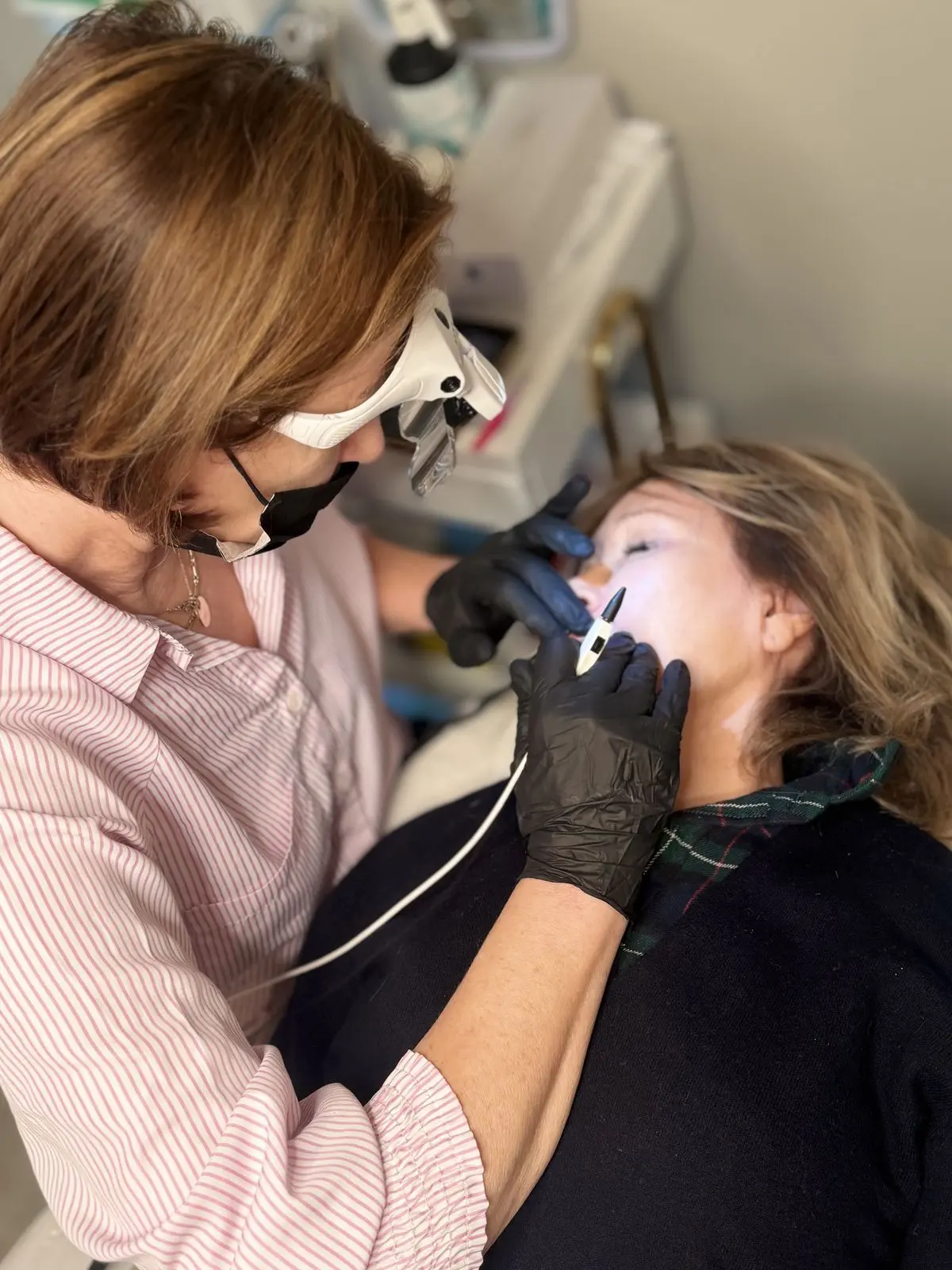
Electrolysis treatment
Permanent Hair Removal
Permanent hair removal for every hair colour and skin type, one follicle at a time.
- Treatment time
- 15 to 60 minutes
- Results
- Area clears progressively over a course
- Longevity
- Permanent for treated follicles
- Downtime
- None — redness settles within hours
- From
- £50
About Permanent Hair Removal
Electrolysis is a long-established method of permanent hair removal. A very fine, sterile probe is placed into each hair follicle and a tiny, controlled current treats the root so the hair can't regrow. Because each hair is treated individually and the method doesn't depend on pigment, it works on all hair colours — including blonde, grey, white and red hair that laser can't remove — and on every skin type.
It's particularly suited to the face and neck, eyebrow shaping, stray or hormonal hairs, and areas where laser isn't suitable. Sessions are booked by time (15, 30, 45 or 60 minutes), so you only pay for the time your area needs.
Key Benefits
- 01Recognised as a permanent hair removal method
- 02Effective on every hair colour, including fair, grey and white
- 03Safe for all skin types and tones
- 04Precise — ideal for brows, upper lip, chin and small areas
- 05Book only the time you need, from 15 minutes
- 06No downtime for most people
Is this treatment right for me?
Electrolysis suits anyone who wants lasting hair removal from a defined area — particularly fair, red, grey or white hairs that laser can't target, small or awkward areas such as eyebrows and the upper lip, and hormonal hair on the chin and neck. It isn't usually carried out during pregnancy, over broken or infected skin, or on raised moles. People with a pacemaker or other implanted electrical device, diabetes, a tendency to keloid scarring, or a skin condition in the area should mention it at consultation so the method can be adapted or another treatment suggested.
You may be suitable if…
- You have unwanted hair of any colour, including blonde, grey, white or red
- The area is small to medium — face, neck, brows, underarms, bikini line or a trail of hair
- You'd like a permanent result and can commit to a course of sessions
- Laser hasn't worked for you, or isn't suitable for your hair or skin
Your consultation will consider…
- Medical history, including pacemakers, diabetes, pregnancy and medication
- Hair colour, density and the likely cause of growth (for example hormonal)
- Skin type, healing and any tendency to pigmentation or keloid scarring
- The method (galvanic, thermolysis or blend) and a realistic course plan
What to expect
Before treatment
Book a consultation first so Cinzia can assess the area and agree a plan. Let hairs grow for a few days beforehand so they can be seen and gripped — don't wax, thread or pluck for at least two weeks, as that disturbs the hair cycle. Arrive with clean skin, free of make-up or lotion on the area.
During treatment
You lie comfortably while a very fine sterile probe — finer than the hair itself — is slipped into each hair follicle along the natural line of the hair. A tiny, controlled current is applied for a fraction of a second to treat the root, and the loosened hair is lifted out with tweezers. Each hair is treated individually. Most people feel a brief warm prick or sting, and the sensation varies with the area and your hormone cycle.
After treatment
The area may look pink and slightly raised for a few hours. A soothing antiseptic lotion is applied, and you can return to normal activities straight away.
Results & longevity
Electrolysis is the only hair removal method recognised as permanent, because it treats each follicle directly. A hair can only be destroyed when it's in its growing phase, and only a proportion of hairs are growing at any one time, so a course is needed. Regrowth comes back finer and weaker as follicles are treated, and the number of hairs needing treatment falls steadily. Typical courses run weekly or fortnightly at first, spacing out as the area clears; most areas take between several months and a year or more, depending on density, hair type and hormonal factors. Hormonal conditions can trigger new hairs over time, which can be treated as they appear.
Recovery, side effects & aftercare
Recovery is quick. The skin can be pink, warm and slightly bumpy for a few hours to a day, and tiny pinpoint scabs can form on some follicles a day or two later — leave them to fall away on their own.
Side effects
Redness, mild swelling and tiny scabs are expected and temporary. Less commonly, the skin can darken or lighten slightly in the treated area (more likely in darker skin and after sun exposure), and over-treatment or picking scabs can, rarely, cause small pitted marks or ingrown hairs. Careful technique and aftercare keep these risks low.
Aftercare
For 48 hours keep the area clean and avoid touching it, make-up on the area, exfoliation, skin acids (such as glycolic or salicylic acid), perfumed products, saunas, steam and swimming. Don't pick any pinpoint scabs. Use a broad-spectrum SPF 30 or higher on treated areas and avoid sunbeds while you're having a course.
Please contact the clinic if the area becomes increasingly sore, hot or swollen, weeps or shows signs of infection, or if you notice any change in skin colour that hasn't settled after a few weeks.
- Downtime
- None; mild redness for a few hours
- Redness
- Common, settles within hours to a day
- Swelling
- Slight raised bumps around follicles, settle within a day
- Bruising
- Uncommon
- Normal activities
- Straight away; avoid gym, sauna and swimming for 24–48 hours
Frequently Asked Questions
Is electrolysis really permanent?
Yes — it's the only hair removal method recognised as permanent, because each follicle is treated directly. It takes a course to catch every hair in its growing phase, and hormonal changes can occasionally activate new follicles later.
How is it different from laser hair removal?
Laser treats many hairs at once but relies on dark pigment, so it can't remove blonde, grey, white or red hair. Electrolysis treats each hair individually and works on every hair colour and skin type, which makes it ideal for fine or light hairs and small areas.
Does it hurt?
Most people describe a quick warm prick or sting as each hair is treated. Sensitivity varies by area and through the menstrual cycle; the current is adjusted to keep you comfortable.
How many sessions will I need?
It depends on the area, how dense the hair is and what's causing it. Sessions are usually weekly or fortnightly at first, spacing out as the area clears. Cinzia will give you a realistic plan at consultation.
Which session length should I book?
Small areas such as a few chin hairs or the upper lip usually need 15 minutes; larger or denser areas need longer. Your first sessions are often longer and get shorter as the area clears. Cinzia will recommend a length at consultation.
Should I shave before my appointment?
No — hairs need to be visible so they can be treated. Let them grow for a few days, and avoid waxing, threading or plucking for at least two weeks beforehand.
Can I have electrolysis if I have a pacemaker?
Please tell us at consultation. Some electrolysis methods aren't suitable with a pacemaker or other implanted electrical device, and you may need clearance from your doctor first.
Your Practitioner

Cinzia Campigotto
Aesthetician & Skin Expert — Electrolysis & Skin Blemishes
Cinzia is a professional aesthetician and skin expert with more than 25 years in the advanced skin and beauty industry. She founded Beauti Skin Clinic in South London in 2017 and specialises in skin consultations and bespoke, results-driven treatment plans. At Trusted Touch Aesthetics she carries out electrolysis hair removal, advanced electrolysis for thread veins, blood spots and skin tags, and skin lesion consultations.