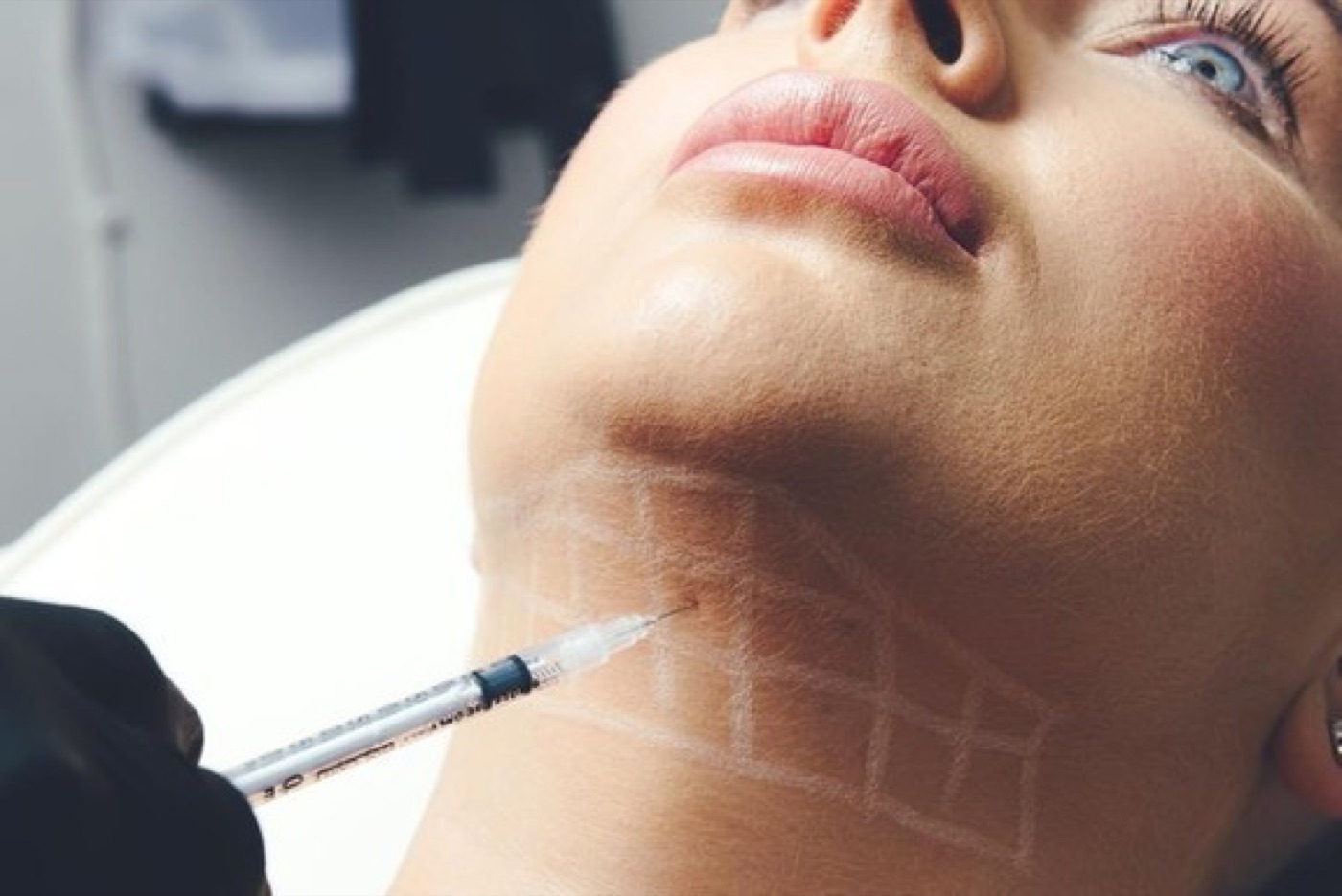
PDO Threads treatment
Neck
Support and tighten the neck area using PDO threads.
- Treatment time
- 45–60 minutes
- Results
- Immediate lift; refines over 2–3 months
- Longevity
- Typically 12–18 months
- Downtime
- 2–3 days; gentle care for 2 weeks
- From
- £300
About Neck
The neck shows age early: the skin is thin, the platysma muscle pulls downwards, and loose, crepey skin can develop beneath the jaw. Neck threads are placed beneath the skin to tighten and support the area and to stimulate collagen where the skin has thinned.
A combination of lifting and smooth support threads is typically used, tailored to whether the concern is sagging beneath the chin, horizontal lines or general crepiness.
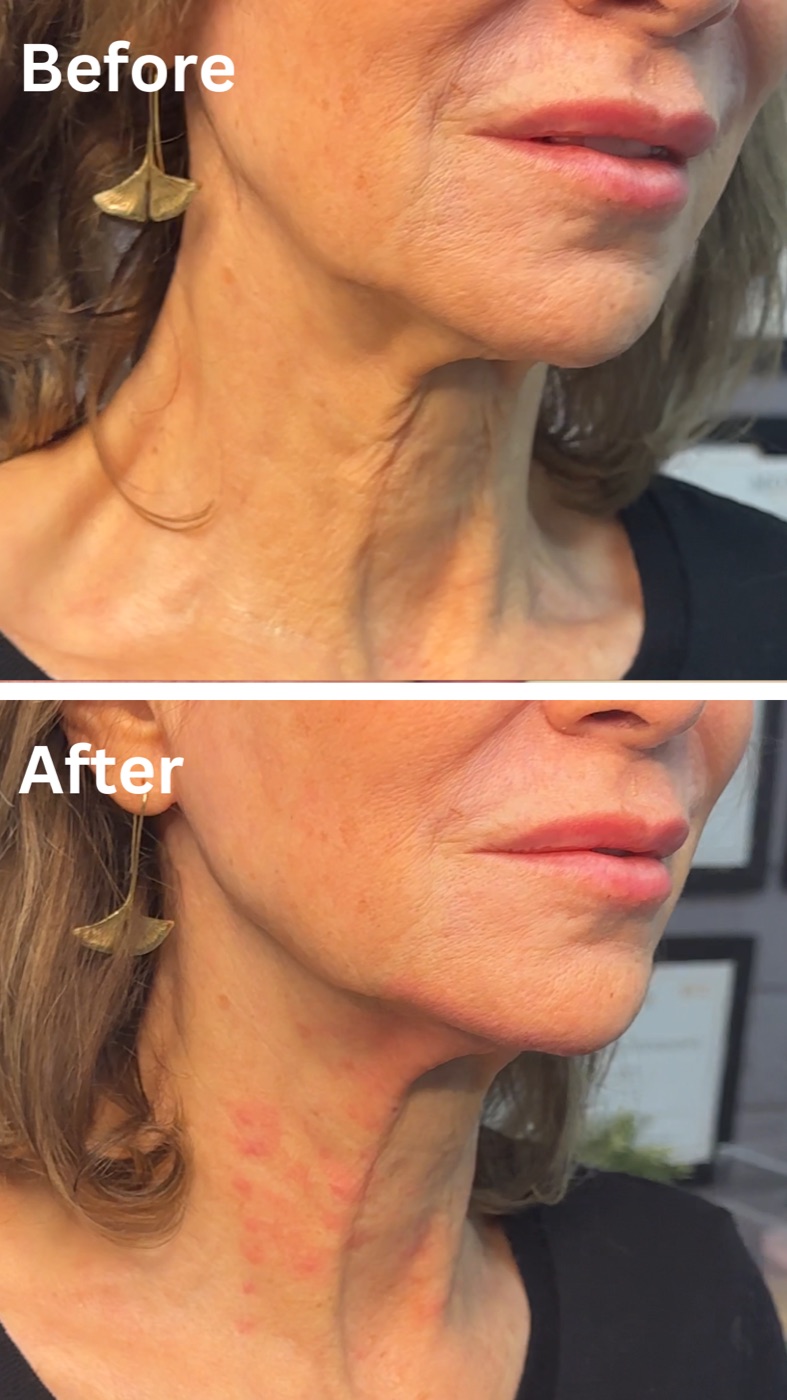
Before & after
Key Benefits
- 01Tightens loose skin beneath the chin and along the neck
- 02Improves crepiness and texture through collagen stimulation
- 03Sharpens the angle between chin and neck
- 04Non-surgical alternative to a neck lift
- 05Combines well with neck-band anti-wrinkle treatment and skin boosters
- 06Threads dissolve naturally
Is this treatment right for me?
Neck threads suit people with mild to moderate laxity or crepiness of the neck who'd like a firmer, smoother look without surgery. Very loose skin or significant fullness under the chin may need a different approach, which John will discuss.
You may be suitable if…
- The skin under your chin or along your neck has started to sag
- You've noticed crepiness or horizontal lines
- You'd like a tighter chin-to-neck angle
- Your skin has reasonable thickness and elasticity
Your consultation will consider…
- How much laxity there is and how much lift threads can realistically give
- Skin thickness and quality — threads work best in skin with some support
- Whether filler, threads or both will give the most natural result
- Your medical history, medication and any previous treatments in the area
What to expect
Before treatment
A consultation with John assesses how much lift is realistic, which threads suit the area and whether threads, filler or a combination will give the best result. Avoid alcohol, aspirin, ibuprofen and blood-thinning supplements for a week beforehand where safe to do so, and don't book within two weeks of dental work.
During treatment
The area is cleansed and marked, then numbed with local anaesthetic injections so the treatment itself is comfortable. Each thread is introduced beneath the skin through a fine needle or cannula and positioned to lift or support the tissue; the entry point is tiny and needs no stitches. A typical session takes 45–60 minutes. For the neck, threads are placed beneath the skin under the jaw and along the neck to tighten and support the tissue.
After treatment
You'll see an immediate lift, alongside some swelling and tightness. The area may feel tender or slightly pulled for a few days as the threads settle. John goes through aftercare and books a review.
Watch
Results & longevity
There's an immediate lift as the tissue is repositioned, which looks its best once swelling settles at around two to three weeks. Over the following two to three months the threads stimulate collagen around them, so the result firms and refines. The threads themselves dissolve over about six months, but the collagen they leave behind keeps the effect going — typically twelve to eighteen months, sometimes longer. Longevity depends on the thread type, your skin quality and age.
Recovery, side effects & aftercare
Threads need a little more care than injectables in the first week. Swelling, tenderness and a sensation of tightness are normal, and there may be bruising at the entry points. Most people are comfortable returning to work after a day or two, and the area settles fully within two to three weeks.
Side effects
Swelling, bruising, tenderness and a tight or pulling sensation are expected and settle over a few weeks. Small dimples or puckering of the skin along a thread can occur and usually smooth out; occasionally a thread end can be felt or seen and needs a small adjustment. Uncommon risks include infection, a thread moving, or temporary asymmetry as the sides settle at different rates; nerve irritation is rare and usually temporary.
Aftercare
For the first week: sleep on your back with your head raised, avoid wide mouth movements, chewing gum and very hard foods, and don't rub or massage the area. Avoid strenuous exercise, saunas, steam and sunbeds for two weeks, and don't have facials or dental work for three to four weeks. Keep the entry points clean and use SPF daily.
Please contact the clinic if you notice increasing pain, spreading redness or warmth, discharge from an entry point, a visible thread end, or dimpling that hasn't improved after two weeks.
- Downtime
- 2–3 days of swelling and tenderness
- Redness
- Mild at entry points
- Swelling
- Common for 3–7 days
- Bruising
- Possible, fades within 1–2 weeks
- Normal activities
- Light activity next day; no strenuous exercise for 1–2 weeks
Frequently Asked Questions
Will it help crepey skin as well as sagging?
Yes — smooth support threads are used specifically to stimulate collagen in thin, crepey skin, while lifting threads address the sag. Skin boosters can add hydration on top.
Can it be combined with neck-band treatment?
Often, yes. Relaxing the platysmal bands with anti-wrinkle treatment reduces the downward pull, which helps the threads' result last.
Is it painful?
Local anaesthetic is used, so the treatment itself is comfortable — you'll feel pressure and movement rather than pain. The area is tender for a few days afterwards.
How long do results last?
The threads dissolve over about six months, but the collagen they stimulate keeps the lift going. Results typically last twelve to eighteen months, sometimes longer, depending on the thread type, your skin and your age.
What happens to the threads?
PDO is the same material as dissolvable surgical stitches. It breaks down gradually over roughly six months and is absorbed by the body, leaving new collagen in its place.
When can I go back to work?
Most people take a day or two. Swelling and any bruising are usually manageable with make-up after that, but allow two weeks before a big event.
Your Practitioner
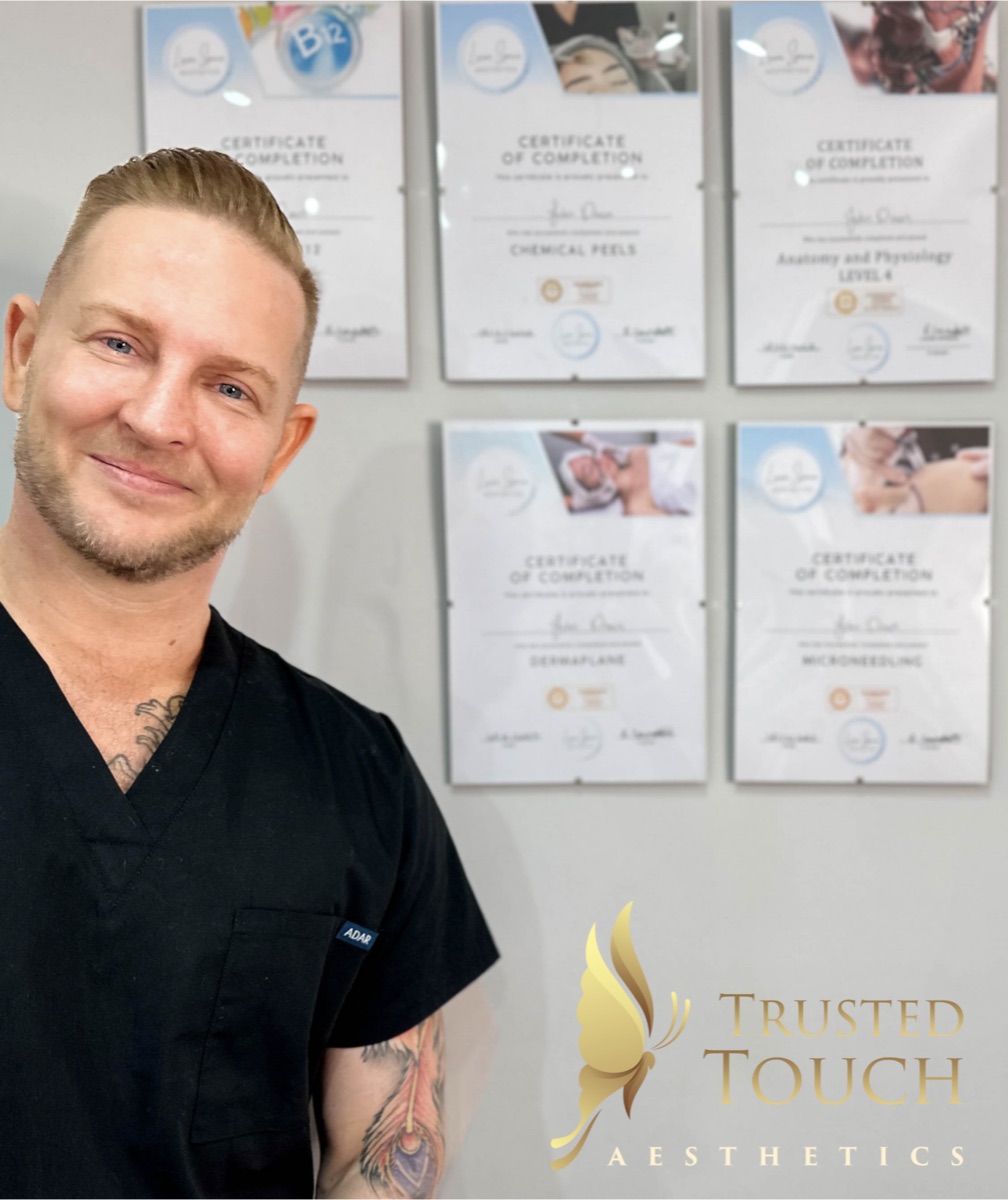
John Dixon
Founder & Aesthetician
John founded Trusted Touch Aesthetics in Fulham and specialises in facial balancing, wrinkle reduction and skin rejuvenation. He is CPD-regulated and fully insured, and is known for taking the time to assess your face properly, explaining every option honestly and never over-treating — the aim is always a natural result that still looks like you. Clients regularly mention his calm manner, attention to detail and the aftercare follow-up that checks in on how you're healing.